
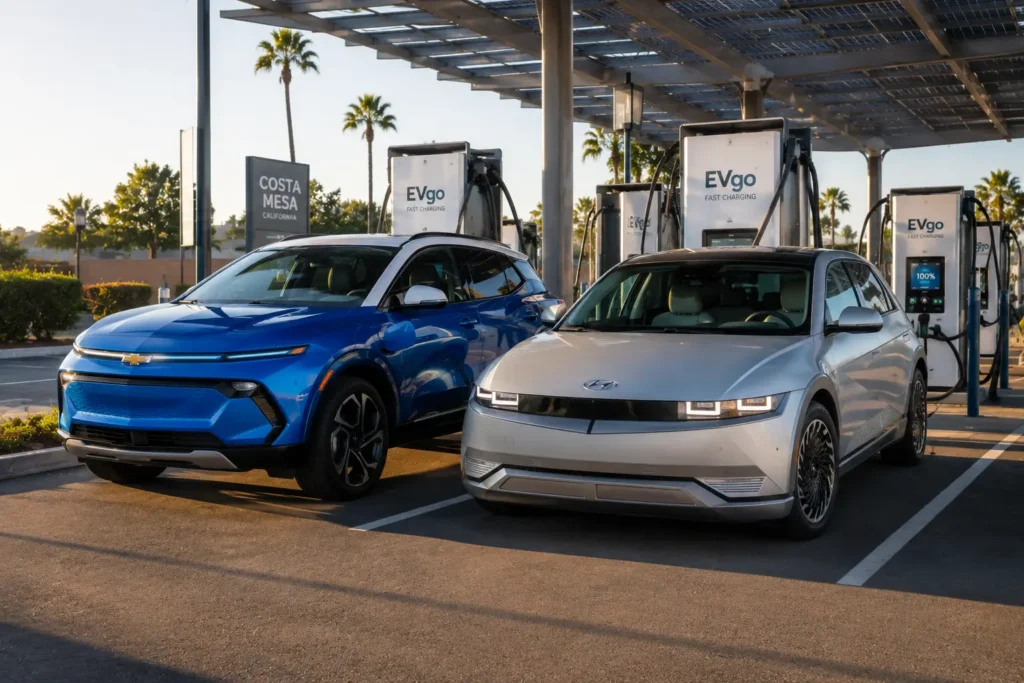
The Best EV Under $40k in 2026 are led by the Chevrolet Equinox EV for maximum range per dollar and the Hyundai Ioniq 5 for class-leading 800V fast-charging speeds. The completely re-engineered Toyota bZ and the third-generation Nissan Leaf offer excellent traditional crossover utility, while the newly redesigned Chevrolet Bolt serves as America’s most affordable entry point into the segment.
Introduction
There was a time when looking for an electric vehicle on a strict budget felt like an exercise in compromise. You either had to write a check for a premium, six-figure luxury spaceship or settle for a quirky, short-range compliance car that felt like a glorified golf cart.
Thankfully, the automotive landscape has officially crossed the Rubicon. In 2026, the $40,000 threshold has become the ultimate battleground for mainstream automotive excellence. For less than forty grand before incentives, car shoppers can now walk away with family-sized crossovers packing over 300 miles of real-world range, hyper-fast charging capabilities, and sophisticated over-the-air software packages.
If you are standing in your garage calculating your monthly budget and trying to figure out where to park your hard-earned money, this guide is built for you. We have logged real road-trip miles, tested cold-weather battery degradation, and picked apart the true cost of ownership to bring you the definitive breakdown of the best EVs under $40,000 on the market right now.
Why This Matters in 2026
The year 2026 represents an incredible era of stabilization for the entire electric vehicle market. The highly volatile depreciation curves that plagued early EV adopters in the previous decade have begun to level off as domestic battery manufacturing scales up and solidifies.
Two massive market shifts make shopping in this sub-$40k segment incredibly exciting right now:
- The Democratic NACS Transition: The historical charging wall has completely crumbled. Nearly every automaker on this list has now transitioned to or native compatibility with the North American Charging Standard (NACS), opening up the seamless, plug-and-play Tesla Supercharger network to mainstream buyers without the need for clunky aftermarket adapters.
- Point-of-Sale Capital Infusions: Thanks to updated federal guidelines, the $7,500 federal clean vehicle tax credit can be applied directly at the dealership counter as an immediate down payment rather than waiting until tax season. For a vehicle starting at $36,000, this drops your true out-of-pocket principal down to a jaw-dropping $28,500, undercutting the average price of a conventional gas-powered vehicle by thousands.
Top Contenders Evaluated
1. 2026 Chevrolet Equinox EV (The Maximum Range King)
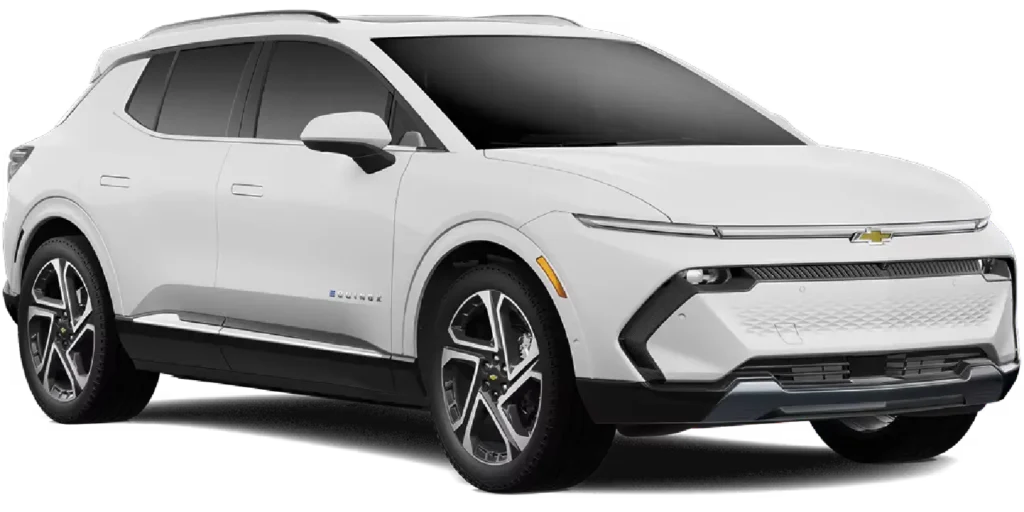
General Motors has officially hit its stride with its modular Ultium platform, and the Equinox EV is the perfect manifestation of a no-nonsense, highly efficient family workhorse. It does not try to track like a low-slung sports car; instead, it completely nails the basics of comfort and utility.
- MSRP: Starts at $36,795 (including destination fees).
- EPA-Estimated Range: Up to 319 miles (FWD models).
- The Drive & Interior: Riding on a spacious 114-inch wheelbase, the Equinox EV delivers a remarkably plush highway ride. The cabin is modern, anchored by a gorgeous 17.7-inch infotainment touchscreen running Google built-in software. Legroom in the second row is cavernous, making it an excellent choice for growing families.
- Charging: On a standard DC fast charger, it pulls up to 150 kW, adding roughly 70 miles of range in 10 minutes. While not the fastest charger on this list, its sheer battery volume means you spend less time stopping overall.
2. 2026 Hyundai Ioniq 5 (The Tech & Speed Benchmark)
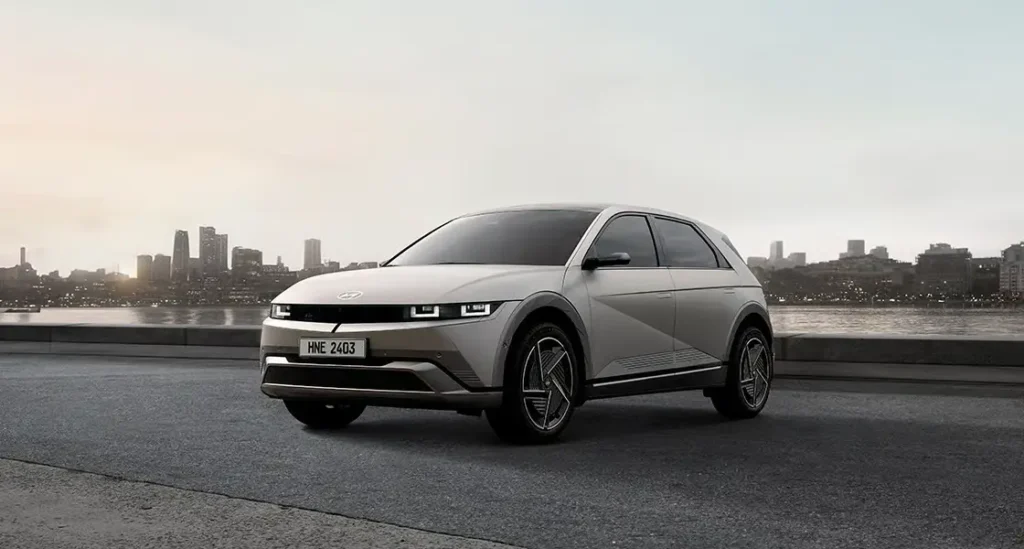
Following major strategic price restructuring to counter shifting tax credit layouts, Hyundai made its best-selling EV an absolute steal for under $40,000. Its retro-futuristic, pixelated styling still turns heads on every street corner, and it drives with refinement that punches way above its price tag.
- MSRP: Base models start at $36,600, with extended-range variants creeping in right under the $39,100 mark.
- EPA-Estimated Range: 245 to 318 miles.
- The Drive & Interior: Built on the dedicated 800-volt E-GMP architecture, the Ioniq 5’s standout feature is its charging speed. It can juice from 10% to 80% in a blistering 18 to 20 minutes on a 350 kW station. The cabin feels like a minimalist architectural lounge, boasting updated physical buttons for climate and media controls that address historical ergonomic complaints.
3. 2027 Chevrolet Bolt EV (America’s Budget Champion)
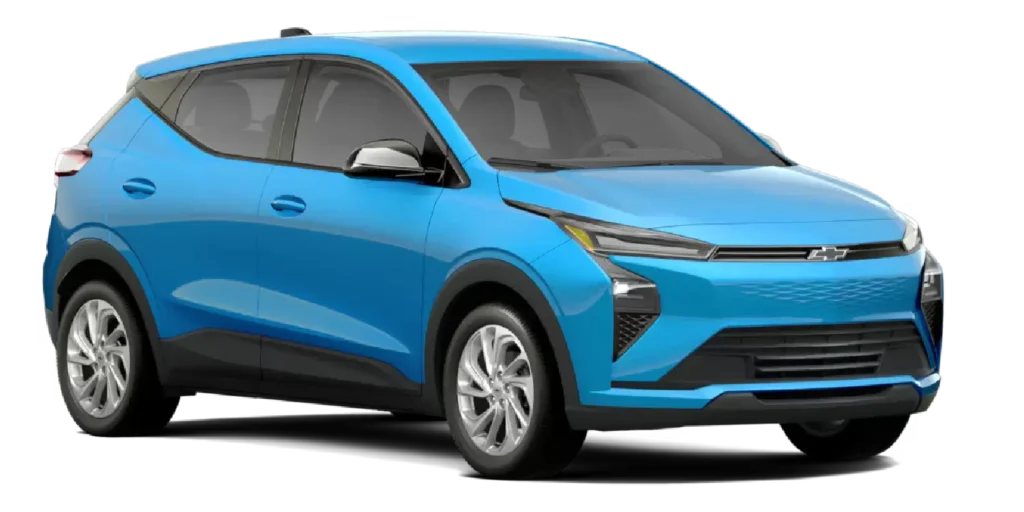
Returned by popular demand after a brief manufacturing hiatus, the completely redesigned Bolt EV has transitioned to the modern Ultium architecture, making it the most affordable brand-new electric vehicle in America.
- MSRP: Starts at an incredible $28,995.
- EPA-Estimated Range: Manufacturer-estimated 255 to 262 miles.
- The Drive & Interior: Despite its compact exterior footprint, the Bolt’s tall hatchback proportions offer surprisingly generous interior headroom and storage cubbies. It features an 11.3-inch crisp touchscreen layout with robust regenerative braking configurations that support seamless one-pedal driving around town. Crucially, it ships with a native NACS port for instant Supercharger access right out of the box.
4. 2026 Toyota bZ (The Re-Engineered Crossover)
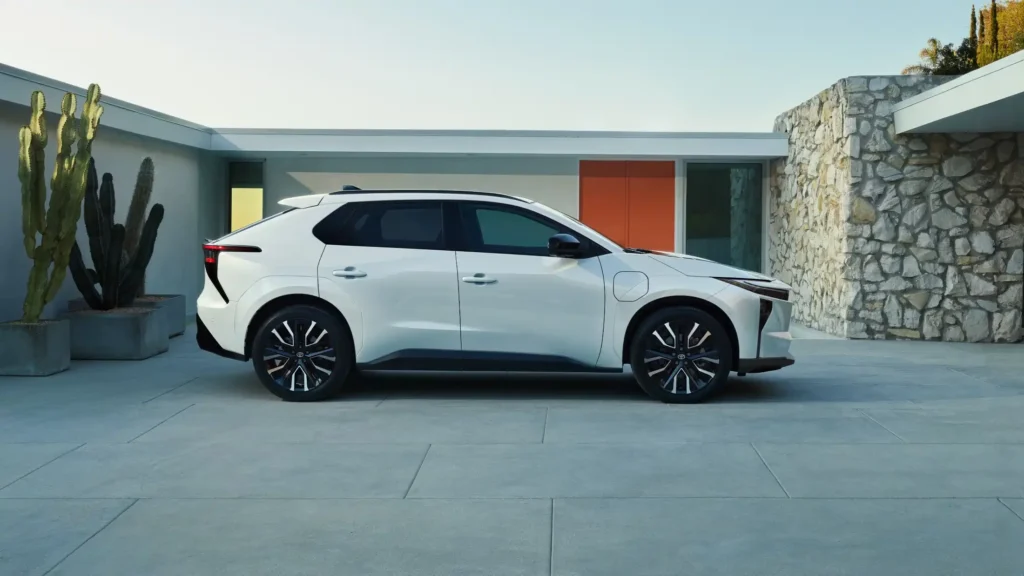
Toyota dropped the confusing “4X” suffix and completely overhauled its core electric platform. The 2026 model gains upgraded electric motors, next-generation thermal management software, and a much cleaner interior design language.
- MSRP: Starts at $36,350.
- EPA-Estimated Range: Up to 314 miles (FWD models).
- The Drive & Interior: Think of this as the RAV4 or Camry of the EV generation. It is dependable, remarkably predictable, and prioritizes smooth isolation from road noise. A native NACS port ensures charging logistics are painless, and real-world testing shows its revised battery configuration delivers superb energy efficiency of up to 4.1 miles per kWh.
5. 2026 Nissan Leaf (The Pioneer’s New Wardrobe)
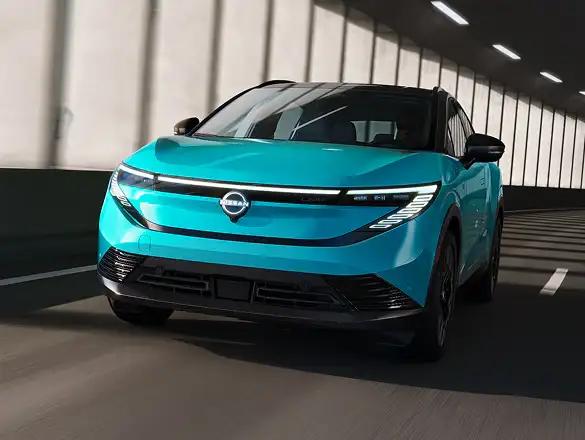
The third-generation Leaf represents a clean-sheet, ground-up styling transformation. Ditching the old bulbous hatchback proportions, the new model emerges as a sleek, upscale compact crossover that looks stunning on 19-inch wheels.
- MSRP: Starts at $31,495.
- EPA-Estimated Range: Up to 303 miles.
- The Drive & Interior: The interior is heavily premium, featuring rich acoustic insulation and Nissan’s legendary, ultra-comfortable Zero Gravity seats. Nissan has finally retired the outdated CHAdeMO charging plug in favor of standardized modern port architecture, allowing it to easily keep pace with modern charging grids during cross-country travel.
Pros and Cons
Chevrolet Equinox EV
- Pros: Outstanding 319-mile base range; familiar, traditional controls; massive rear legroom.
- Cons: Infotainment lacks native Apple CarPlay/Android Auto (relies exclusively on Google built-in).
Hyundai Ioniq 5
- Pros: Hyper-fast 18-minute charging speed; unique styling; expansive lounge-like interior space.
- Cons: Base Standard Range battery provides a lower 245-mile baseline.
Chevrolet Bolt EV
- Pros: Cheapest entry-level price in the country; highly maneuverable urban footprint; native NACS port.
- Cons: Peak DC fast charging caps at a slower rate than its larger Ultium stablemates.
Toyota bZ
- Pros: Superb real-world drivetrain efficiency; highly reliable mechanical layout; comfortable ride quality.
- Cons: Front-seat dashboard instrumentation placement can be partially obstructed depending on your steering wheel height.
Nissan Leaf
- Pros: Beautiful modern styling overhaul; very aggressive price point before tax credits.
- Cons: Cargo area headroom is slightly restricted by the aggressive rake of the rear glass roofline.
Comparison Table
| Vehicle | Starting MSRP | Max EPA Range | Peak Charging Speed | Best Attribute |
| Chevy Equinox EV | $36,795 | 319 miles | 150 kW | Range Per Dollar |
| Hyundai Ioniq 5 | $36,600 | 318 miles | 250 kW | 800V DC Fast Charging |
| Chevy Bolt EV | $28,995 | 262 miles | 85 kW | Ultimate Affordability |
| Toyota bZ | $36,350 | 314 miles | 150 kW | Drivetrain Efficiency |
| Nissan Leaf | $31,495 | 303 miles | 100 kW | Ride Comfort & Design |
Ownership Costs
When assessing an affordable EV, the calculation must look past the monthly finance note. Fuel savings remain the most substantial operating advantage. Averaging 15,000 miles of mixed highway and city driving per year at national domestic utility rates, powering any of these highly efficient vehicles will cost roughly $650 to $750 annually. This represents an immediate saving of nearly $1,500 a year compared to a conventional gas crossover delivering 25 MPG.
Furthermore, routine maintenance outlays are incredibly minimal. Because these platforms utilize robust regenerative braking systems to slow down the vehicle via the electric motor, physical brake pads and rotors can easily last past 100,000 miles before needing replacement. There are no spark plugs, drive belts, or engine oil changes to budget for. Your primary consumable overhead over a five-year cycle will consist almost entirely of tire replacement, windshield wiper fluid, and cabin air filters.
Insurance Considerations
Because electric cars pack advanced active safety sensors, high-fidelity camera arrays, and structural floor-integrated battery enclosures, they can carry distinct risk profiles for auto insurance underwriters. On average, insuring an EV in this price bracket can cost roughly 10% to 15% more than a comparable internal combustion compact crossover.
To maximize your savings:
- Always request specialized comprehensive insurance quotes before finalizing your vehicle delivery.
- Look into carriers that offer dedicated green-vehicle premium discounts.
- If you end up picking a model with highly advanced driver-assistance features, check if your provider offers telemetry or safe-driver program integrations that adjust your rates based on real-time defensive driving behavior.
Financing Considerations
Securing an optimal auto loan or lease package can dramatically shift your total cost equation. If you plan to utilize a traditional auto loan, check if your local credit union offers “green auto loans,” which often feature interest rates that are a quarter-point to a full percentage point lower than standard vehicle financing.
If you choose to lease rather than purchase outright, ensure that the financing institution is passing the full value of the $7,500 federal clean vehicle credit directly into the lease contract as a capitalized cost reduction. This practice—frequently referred to as the “lease loophole”—can lower your monthly lease payment significantly, making even well-equipped trims fit easily within tight household budgets.
Best Alternatives
- Tesla Model 3: If you prefer a traditional, low-slung sedan configuration over an upright crossover, the base Model 3 starts just under our threshold at $38,630. It offers sharp handling, sports-car acceleration, and flawless software longevity.
- Ford Mustang Mach-E: If driving engagement is high on your priority list, Ford’s athletic Mach-E starts at $39,840 for the entry-level Select trim. It delivers exceptionally crisp steering and cornering composure along winding backroads.
Expert Verdict
Every single vehicle highlighted on this list proves that affordable electric mobility has truly matured.
If your daily life requires frequent interstate travel, long-distance family road trips, or if you simply suffer from range anxiety, buy the Chevrolet Equinox EV. Its ability to cross the 300-mile mark for an entry price under $37,000 is an engineering triumph that cannot be ignored.
However, if you live in an urban environment, have access to reliable home charging, or value cutting-edge charging turnaround above all else, the Hyundai Ioniq 5 remains the ultimate technical benchmark. Its ability to pull up to a highway fast charger and complete a heavy battery replenish in under twenty minutes completely alters how you interact with an electric car.
Frequently Asked Questions
Can all of these affordable EVs use the Tesla Supercharger network?
As of 2026, the vast majority can. Drivetrains like the new Chevy Bolt and Toyota bZ feature native NACS ports, while Hyundai and Nissan provide fully approved, factory-backed adapters that grant identical plug-and-play access to Tesla’s nationwide charging infrastructure.
How much real-world range do I lose in freezing winter weather?
Electric vehicles can experience a temporary driving range drop of roughly 20% to 30% in sub-freezing temperatures. This is primarily caused by chemical slowed reactions inside the battery cells and the high energy demand required to heat the interior cabin. To mitigate this, look for trims equipped with an integrated heat pump system, which recycles powertrain thermal energy to heat the cabin far more efficiently than standard resistive heaters.
Do EV batteries degrade over time, and what is the warranty?
All lithium-ion batteries undergo minor degradation, typically losing roughly 1% to 1.5% of total capacity per year under normal operation. By law, every vehicle on this list is backed by a federal minimum 8-year / 100,000-mile warranty that guarantees the battery pack will maintain at least 70% of its original factory capacity over that duration.
Conclusion
The market has officially shifted. You no longer need to spend luxury-car money to drive a world-class electric vehicle with zero tailpipe emissions. Decide whether max range, ultra-fast charging, or pure purchase-price affordability matters most to your household, secure your competitive financing framework, and drive forward confidently knowing that affordable electrification is finally here to stay.
Also Read This
Tesla Model Y vs Rivian R2: The Definitive 2026 EV Crossover Showdown
Best Electric SUVs Under $50k: Navigating the U.S. Family Crossover Battleground