
In 2026, full coverage for an electric vehicle averages $3,159 annually, representing a massive 42% premium penalty over the $2,218 average for standard gas-powered cars. High component replacement values, specialized labor shortages, and complex floor-pan battery exposures keep electric vehicle underwriting metrics substantially elevated across the United States market.
Introduction
Swapping a conventional gas tank for a high-capacity lithium-ion battery pack promises clear financial relief at the fuel pump. Drivers look forward to eliminating routine engine oil changes, spark plug swaps, and timing belt maintenance.
However, thousands of American car shoppers encounter an unexpected roadblock during the final step of their purchasing journey: configuring their new auto insurance policy.
The sudden realization that a comprehensive auto policy could skyrocket by hundreds of dollars annually can instantly disrupt any calculated total cost of ownership equations.
This pricing surge creates significant buying confusion for consumers trying to gauge whether an electric vehicle truly delivers long-term operational savings.
Ownership concerns have intensified as real-world data reveals that the expense of protecting an electric vehicle remains a massive financial differentiator in today’s market.
To understand this shifting financial landscape, we must analyze the structural underwriting factors that keep alternative-fuel vehicle premiums floating high above traditional internal combustion engine options.
Quick Answer Section
The brief explanation for the premium gap is that electric vehicles are fundamentally more expensive to repair following an accident. While electric cars feature significantly fewer moving parts, their structural components are highly integrated and expensive to replace.
Insurers balance their risks by raising baseline premiums to ensure they can cover the substantial liabilities associated with specialized high-voltage repairs and long shop stays.
Recommended Tool: Insurify Auto Insurance Quote Comparison Marketplace
Why: This tool allows drivers to instantly cross-reference real-time quotes from over 100 carriers to uncover the most competitive regional electric vehicle insurance rates.
Key Takeaways
- The 2026 Premium Divide: Electric vehicles carry an average annual insurance cost of $3,159, which sits 42% higher than the traditional gas car average of $2,218.
- The New Car Convergence: For late-model vehicles manufactured from 2024 onward, the insurance cost gap shrinks to a much tighter 18% delta.
- The Repair Complexity Surcharge: Specialized mechanic labor rates for high-voltage system isolation drive overall collision claim totals up substantially.
- Regional Premium Extremes: Drivers in Massachusetts face a massive 54% electric vehicle insurance premium increase, followed closely by New York at a 45% surcharge.
- The Mileage Offset Threshold: Commuters must drive at least 5,800 additional highway miles annually to offset the insurance penalty through home-charging fuel savings.
- Tesla Underwriting Outliers: Premium mainstream models like the Tesla Model 3 and Model Y see elevated claims frequencies that push annual urban rates past $4,000.
Decoding the 42% Premium Penalty
The Macroeconomic Reality of Auto Underwriting
Auto insurers operate on thin margins and rely on extensive actuarial databases to predict the exact probability and cost of future collision claims.
When evaluating electric platforms, underwriting algorithms must account for a relatively brief historical footprint compared to over a century of internal combustion data.
This lack of long-term baseline data causes insurance companies to price their policies conservatively, passing the uncertainty down to consumers as a premium surcharge.
As more claims filter through the system, insurers continue to refine their risk models to account for real-world repair data.
Behind the Numbers of the Latest Industry Data
A comprehensive June 2026 analysis of over 235 million auto insurance quotes highlighted a stark $941 annual premium gap between powertrains.
The national average for full coverage car insurance shows that conventional gas vehicles require an accessible $2,218 per year.
In contrast, securing an identical full coverage policy for an electric model demands an average commitment of $3,159 annually.
This means electric vehicle owners face an immediate monthly insurance penalty of nearly $80 before driving their first mile.
Why Component Values Disproportionately Inflate Risk
The initial sticker price of an electric vehicle remains higher than an equivalent gas-powered alternative, directly impacting comprehensive coverage rates.
Because insurance premiums inherently track the total market value of the asset being protected, higher MSRPs trigger higher baseline premiums.
Furthermore, the advanced technology woven into alternative-fuel platforms means that even minor fender benders can damage expensive, non-repairable sub-systems.
When advanced hardware is tightly integrated into outer body panels, simple collision damage quickly escalates into an astronomical financial liability.
The Core Drivers Behind Elevated Electric Vehicle Premiums
High-Voltage Systems and Specialized Service Labor
Deactivating and servicing a compromised electric vehicle requires certified master technicians trained in high-voltage safety protocols.
The systemic shortage of these specialized professionals allows qualified independent repair shops and dealerships to command premium hourly labor rates.
These elevated labor costs add substantial financial weight to every single collision claim, forcing insurers to adjust their regional premium matrices upward.
Body shops must invest tens of thousands of dollars in specialized safety gear, isolation bays, and heavy-duty diagnostic tooling to handle electric vehicles.
These capital infrastructure investments are passed directly along to insurance adjusters through increased repair estimates.
The Vulnerability of Floor-Pan Battery Packs
The large traction battery pack represents the single most valuable component inside any modern electric car, often accounting for half the vehicle’s worth.
Because these battery modules are positioned low within the floor pan, they are highly vulnerable to underbody road debris impacts.
Even minor structural scuffs or microscopic case punctures can compromise cell stability, requiring a complete, high-dollar pack replacement rather than a simple patch.
The integration of complex safety enclosures means that body shops cannot easily open the sealed pack to swap out individual damaged modules.
Consequently, insurers are forced to cover the entire cost of a brand-new factory battery pack for what appears to be minor physical contact.
Advanced Driver Assistance Systems Calibration Expenses
Modern electric vehicles serve as rolling testbeds for cutting-edge driver assistance suites, packing bumpers and windshields with delicate sensors.
Following a collision, these cameras, radar units, and lidar modules require meticulous, digital recalibration to ensure factory safety compliance.
A basic bumper replacement that costs a few hundred dollars on an older gas car transforms into a multi-thousand-dollar tech repair invoice.
If a sensor is misaligned by even a fraction of a millimeter, automated braking and lane-keep safety features can malfunction.
Insurers must mandate complete system scans and digital calibrations for every claim, locking in high repair minimums regardless of crash severity.
Structural Unibody Castings and Total Loss Thresholds
Automakers are increasingly utilizing massive, single-piece unibody castings to streamline vehicle assembly and maximize structural rigidity.
While this engineering technique reduces manufacturing complexity, it makes post-accident structural repair nearly impossible for independent body shops.
Minor impacts that tweak a section of a single-piece frame casting frequently force insurance adjusters to declare the entire vehicle a total loss.
Instead of cutting out and replacing a small section of a traditional steel frame rail, the entire vehicle chassis must be discarded.
This structural unbending threshold lowers the total loss barrier, causing insurance companies to write off electric cars at a much higher frequency.
The Tesla Insurance Outlier and Market Realities
Model 3 and Model Y Claims Frequencies
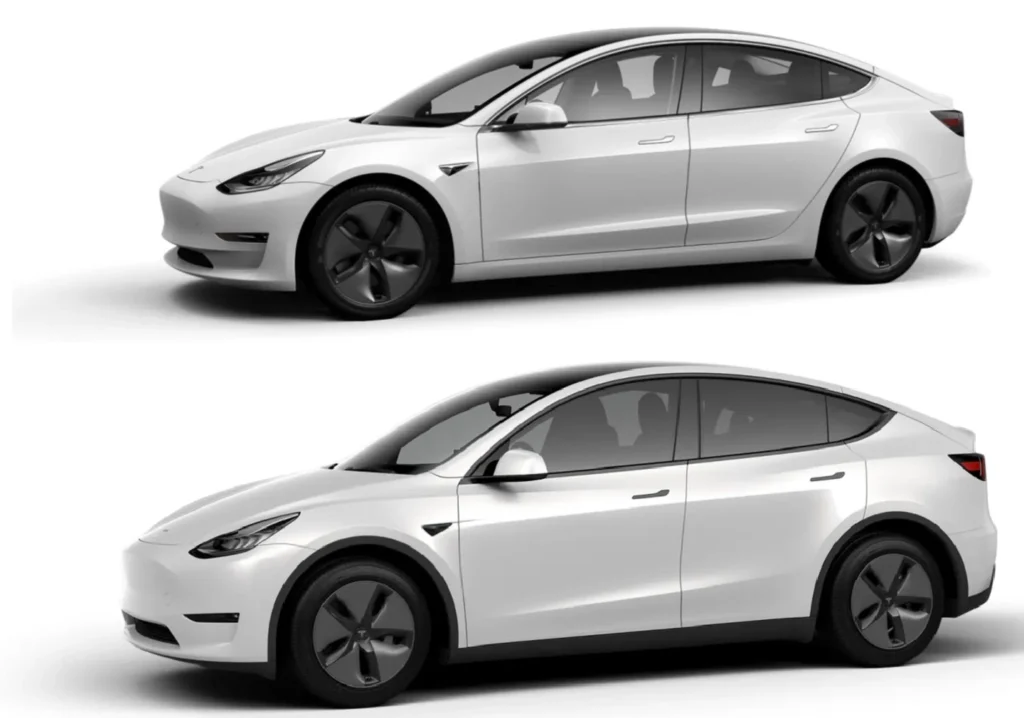
Tesla remains the undisputed volume leader in the American electric vehicle market, making the Model 3 and Model Y common sights on commuter highways.
However, underwriting data shows that Tesla vehicles exhibit higher-than-average collision claims frequencies and exceptionally steep average repair bills.
This combination of frequent incidents and high repair bills consistently pushes annual coverage rates for these popular models past $4,000.
The instant torque delivery of electric motors provides rapid acceleration, which can occasionally catch distracted drivers off guard, contributing to increased fender benders.
Actuaries adjust Tesla insurance premiums to match this elevated risk profile, directly impacting the segment’s overall national average.
Monopolized Repair Networks and Shop Backlogs
Tesla controls a tightly restricted network of authorized body shops and exercises strict oversight over the distribution of replacement body panels.
This monopolized supply chain routinely generates lengthy repair backlogs, leaving damaged customer vehicles sitting in shops for multiple months.
Insurers must foot the bill for extended rental car coverages during these delays, an added operational expense that directly inflates policy premiums.
The lack of alternative aftermarket component suppliers keeps wholesale parts pricing firmly within factory control, minimizing competitive cost reductions.
Until independent third-party parts manufacturers gain widespread access to the ecosystem, repair timelines and associated insurance expenses will remain high.
Proprietary OEM Insurance Solutions
To combat soaring traditional premiums, Tesla introduced its own real-time behavior-based insurance product across several states.
This program utilizes onboard telematics to monitor braking habits, hard cornering, and tailgating metrics to calculate a monthly safety score.
While safe drivers can secure lower rates, a single aggressive highway commute maneuver can cause the next month’s premium to spike unpredictably.
This creates an environment of financial volatility, where owners must consciously alter their driving behavior to protect their monthly household budget.
Furthermore, drivers who frequently travel late at night are penalized by the algorithm, limiting the broad appeal of proprietary telematics coverage.
Geographic Variances: State-by-State EV Policy Analysis
High-Tariff States: Massachusetts, New York, and New Jersey
The severity of the electric vehicle insurance penalty changes dramatically depending on state regulations and local population densities.
Massachusetts leads the nation with a staggering 54% premium increase for electric models, resulting in an average cost of $3,560 for newer cars.
New York follows closely with a 45% cost penalty, while New Jersey drivers face a 36% premium increase due to dense urban traffic risks.
In these northeastern corridors, high litigation rates, steep shop labor charges, and dense vehicle congestion compound the baseline risks of EV ownership.
Buyers in these high-tariff states must proactively acquire insurance quotes before executing a vehicle purchase to avoid immediate budgeting stress.
Low-Penalty States: Montana, Ohio, and Nebraska
Conversely, specific regional markets in the United States display a negligible insurance gap between alternative and conventional powertrains.
In Montana, the premium delta actually flips, making a newer electric vehicle roughly 4% cheaper to insure than an equivalent gas car.
Nebraska also displays an optimized market where electric premiums sit 1% below traditional options due to lower localized claims frequencies.
Ohio and similar midwestern regions benefit from more spread-out traffic patterns, fewer specialized repair backlogs, and lower baseline labor tracking.
Drivers in these territories can transition into alternative-fuel setups without worrying about an immediate insurance cost penalty eroding their savings.
The Impact of Regional Claims Density and Climate Risks
States with high rates of climate-driven weather events, such as coastal flooding or severe hailstorms, see elevated baseline auto rates across the board.
When an extreme weather event impacts an area with high electric vehicle adoption, the potential for widespread battery water damage increases.
Insurers react to these concentrated environmental risks by hiking comprehensive coverage tiers to shield their regional capital reserves from catastrophic losses.
Population density also concentrates claims frequencies, as urban areas see far more low-speed collisions that damage delicate driver-assistance sensors.
This means a metropolitan driver will always pay a severe geographic premium over a rural driver operating the identical vehicle model.
Energy Savings vs. Insurance Penalties: Balancing the Ledger
Offsetting the $941 Annual Insurance Penalty via Off-Peak Charging
To determine if an electric vehicle makes financial sense, buyers must look beyond the premium surcharge and calculate operating expenses.
The national average regular gasoline price sits at a painful $4.26 per gallon, while residential electricity averages 18.05 cents per kilowatt-hour.
By charging an electric car at home overnight, drivers can power their vehicles for an equivalent of roughly $1.35 to $1.50 per gallon.
This deep operational cost advantage creates a continuous stream of monthly savings that can be weaponized against the insurance penalty.
Over a typical multi-year ownership cycle, these compounding energy savings can effectively neutralize the baseline underwriting surcharge.
The Real-World Highway Commute Math
A standard gas crossover achieving 25 MPG requires $17.04 in fuel to travel 100 miles on a typical highway commute.
An efficient electric crossover utilizing 18.05-cent home power can cover that exact same 100-mile distance for just $5.41.
This $11.63 savings per 100 miles means a driver can fully recover the $941 annual insurance penalty after traveling approximately 8,100 miles.
If your standard daily commute is long, you will cross this financial breakeven threshold early in the calendar year.
Conversely, low-mileage drivers who travel less than 5,000 miles annually will struggle to outrun the steep upfront insurance overhead.
How Public Charging Infrastructure Alters the Equation
The entire operating cost benefit disappears if an owner lacks home charging and relies exclusively on public DC fast chargers.
Commercial networks like Electrify America or EVgo command premium electricity rates ranging from 48 cents to 64 cents per kilowatt-hour.
Fueling an electric vehicle via public fast chargers raises driving costs to 16.5 cents per mile, almost matching a gas car’s 17 cents.
When you stack commercial charging rates on top of a $941 insurance penalty, the financial logic of an electric car collapses.
Home charging infrastructure remains the absolute anchor required to unlock the true economic viability of alternative powertrains.
The 2024+ Pivot: Why Newer Models are Closing the Insurance Gap
The 18% Premium Convergence for Late-Model Cars
While the historical car market shows a massive 42% premium divide, a significant shift is occurring among brand-new vehicles.
When isolating vehicles manufactured from the 2024 model year onward, the insurance cost gap shrinks to a much more manageable 18%.
This convergence is a vital indicator that the financial penalty of owning an electric platform is actively softening for new buyers.
As manufacturing methodologies stabilize and insurance actuaries acquire cleaner risk tracking data, introductory policy quotes are stabilizing.
The Rising Mechanical Complexity of Modern Gas-Powered Options
The primary reason the gap is narrowing is not because electric policies are plunging, but because gas cars are becoming highly complex.
To meet strict federal fuel economy standards, modern gas engines rely on intricate turbochargers, micro-hybrid systems, and complex transmissions.
These highly advanced mechanical configurations have caused traditional vehicle repair invoices to skyrocket, matching the baseline complexity of an EV.
A major powertrain failure on a modern internal combustion car now mirrors the component replacement expense of an electric drive unit.
Insurers recognize this rising repair tracking across gas fleets and have adjusted traditional auto policies upward accordingly.
Standardization of High-Tech Sensors Across Powertrains
Newer gas-powered vehicles now carry the exact same advanced safety sensor suites, radar arrays, and camera modules as modern electric options.
A front-end collision on a 2026 gas crossover requires the identical expensive digital recalibration process as an electric crossover.
As high-tech componentry becomes completely standardized across the auto industry, the historical insurance underwriting delta will continue to dissolve.
Insurers are shifting toward a vehicle risk model focused entirely on vehicle weight, driver history, and automated safety performance rather than powertrain type.
Financial Head-to-Head Comparison
2026 Cost Comparison: EV Insurance Cost vs Gas Car
- National Average Annual Premium: Electric Vehicle: $3,159 | Gas-Powered Car: $2,218
- Premium Gap for Newer Models (2024+): Electric Vehicle: 18% Delta | Gas-Powered Car: Baseline
- Average Cost Per Mile to Fuel: Electric Vehicle (Home Charging): 4.5 Cents | Gas-Powered Car (25 MPG): 17.0 Cents
- Average Cost Per Mile to Maintain: Electric Vehicle: 3.1 Cents | Gas-Powered Car: 6.1 Cents
- Highest Premium Surcharge State: Electric Vehicle (Massachusetts): 54% Increase | Gas-Powered Car: Baseline
- Typical Annual Insurance Penalty: Electric Vehicle: +$941 | Gas-Powered Car: $0 Baseline
Expert Analysis
The automotive insurance sector is experiencing a structural realignment as alternative powertrains capture significant market share. Actuaries can no longer rely solely on legacy risk models, forcing a massive push toward real-world data collection.
For car buyers, the current premium gap highlights the critical importance of evaluating the total cost of ownership rather than focusing entirely on window sticker prices. A vehicle that saves you money at the fuel pump can easily drain those reserves if your monthly insurance payment doubles.
As manufacturing techniques evolve and independent repair networks grow more robust, the extreme repair overheads currently plaguing alternative platforms will naturally decrease. Until that industry maturation occurs, managing your personal credit history and keeping a clean driving record remain your primary levers to minimize auto premiums.
Pros and Cons
Insuring an Electric Vehicle
- Pro: Green vehicle safety discounts are increasingly available from select national auto insurance carriers like GEICO and Root.
- Pro: Lower centers of gravity and advanced safety technology suites help minimize the frequency of severe bodily injury liability claims.
- Con: Baseline annual full-coverage premiums average $941 higher than equivalent internal combustion options across all model years.
- Con: Extreme vulnerability to total loss designations from minor underbody scuffs or frame-casting distortion forces premature write-offs.
- Con: Restricted factory-authorized body shop networks generate extended repair wait times and high secondary rental car liabilities.
Who Should Buy It
Drivers who maintain excellent credit profiles, boast clean driving records, and accumulate over 15,000 commute miles annually are ideal candidates. High-mileage commuters quickly outrun the premium penalty through compounding operational savings, provided they utilize low off-peak home charging rates. Residents of low-penalty states like Montana or Nebraska also gain an optimized financial profile.
Who Should Avoid It
Urban apartment renters and condominium residents who lack dedicated overnight home charging infrastructure and rely entirely on public fast-charging nodes should avoid them. If you reside in exceptionally high-premium territories like Massachusetts or New York, localized premium spikes can completely wipe out any projected operational fuel savings. Additionally, drivers with recent traffic citations or sub-650 credit scores will encounter astronomical premium tiers.
Best Alternatives
If the current insurance math does not align with your household budget, a traditional plug-in hybrid vehicle (PHEV) like the Toyota RAV4 Prime serves as an intelligent middle ground. PHEVs capture localized electric commutes without introducing the extreme floor-pan battery replacement liabilities that trigger high premium tiers. Conventional high-MPG hybrids from Honda and Lexus also deliver highly predictable operational cost profiles without insurance penalties.
FAQs
Why is EV insurance more expensive than gas car insurance? Electric car insurance commands higher rates primarily due to steep component replacement costs, specialized high-voltage mechanic labor fees, and high-tech safety sensor recalibration demands.
Do newer EV models have cheaper auto insurance premiums? Yes, for vehicles manufactured from the 2024 model year onward, the premium gap drops down to an 18% delta because modern gas cars have also grown increasingly complex and costly to repair.
Which states feature the highest insurance penalty for electric cars? Massachusetts leads the United States with a steep 54% premium increase for electric vehicles, with New York tracking closely at a 45% premium penalty and New Jersey at 36%.
Can you get special auto insurance discounts for driving an electric car? Several national insurance carriers offer nominal “green vehicle” discounts, though these minor percentage cuts rarely offset the higher baseline underwriting fees driven by repair complexities.
Does your personal credit score affect electric vehicle insurance premiums? Yes, auto insurers place heavy emphasis on your personal credit history and individual driving record, both of which impact your baseline premium far more than the vehicle’s underlying powertrain type.
Does comprehensive auto insurance cover an EV battery pack? Standard comprehensive and collision policies will cover battery replacement if the damage is caused by an auto accident, vandalism, or a natural event, though policy limits vary.
Why do insurers write off electric vehicles after minor accidents? If a collision compromises a vehicle’s single-piece unibody casting or triggers a potential internal battery module failure, the repair cost easily exceeds the total loss threshold, forcing a write-off.
How many miles must I drive to make an electric car cheaper than a gas car? Assuming home charging rates and $4.26 per gallon gas, a driver typically must cover at least 5,800 to 8,100 highway miles annually to offset the upfront premium insurance gap.
Final Verdict
Skipping the gas station does not automatically guarantee a lower monthly transport budget if your auto insurer recalculates your risk profile into a premium bracket. For mainstream car buyers considering options like a Tesla Model Y or Rivian R1S, the premium penalty represents a tangible financial hurdle that demands advanced mathematical planning. Unless you cover serious annual highway mileage and possess dedicated, off-peak home charging infrastructure, conventional high-MPG hybrids remain the safer, more predictable financial play in 2026.