

The highly anticipated Maruti Wagon R Flex Fuel price commands a modest, calculated premium of Rs 40,000 to Rs 50,000 over the equivalent standard petrol variant, positioning its entry point at approximately Rs 6.80 lakh (ex-showroom). Officially unveiled in the presence of Union Minister Nitin Gadkari, this historic launch effectively marks the arrival of India’s very first mass-market flex-fuel passenger vehicle. Engineered to break the country’s heavy reliance on expensive fossil fuel imports, this upgraded tallboy hatchback can run on any ethanol-petrol blend ranging from regular E20 up to E85 and pure E100 ethanol.
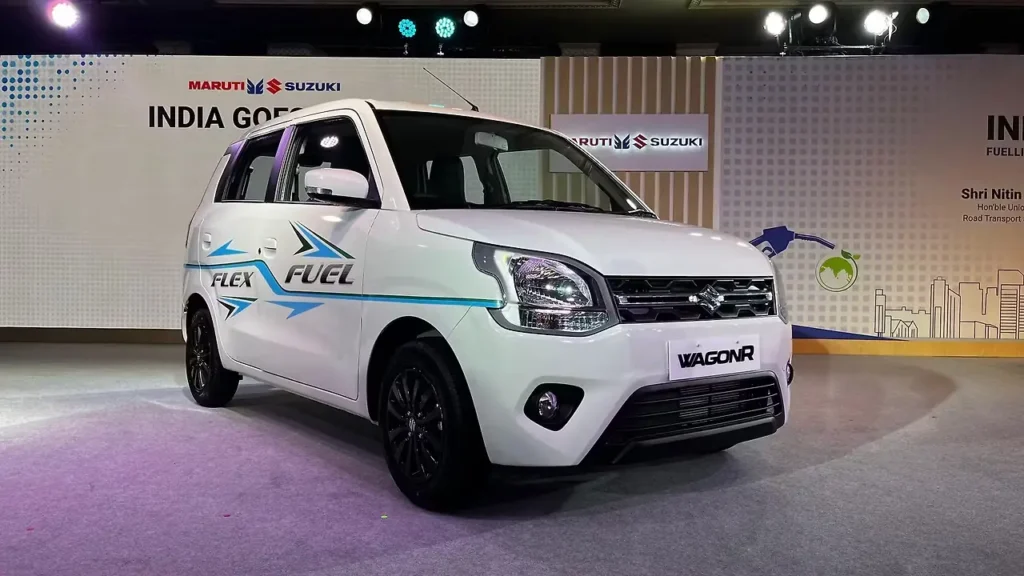
Key Highlights
- Strategic Pricing Premium: Commands an estimated upfront development premium of Rs 40,000 to Rs 50,000 over the standard ICE version.
- Universal Blend Compatibility: Operates seamlessly on any fuel mixture spanning from 20% ethanol (E20) up to 100% pure ethanol (E100).
- Reinforced Mechanical Internals: Features extensive material updates, including corrosion-resistant fuel lines and a heated fuel rail setup.
- Intelligent ECU Adaptation: Employs a specialized fuel composition sensor that dynamically adjusts spark timing based on the current ethanol concentration.
- Substantial Running Cost Relief: Anticipated government subsidization of E85 fuel could slash direct per-kilometer fuel bills by up to 30%.
What Happened? India’s Flex-Fuel Revolution Begins
In a move that fundamentally alters the landscape of alternative powertrain technology in India, Maruti Suzuki has officially rolled out the production-spec Wagon R Flex Fuel. The vehicle’s launch addresses a long-standing challenge by introducing a highly affordable alternative to battery electric setups. The Ministry of Road Transport and Highways (MoRTH) recently amended automobile testing and certification regulations to recognize E100 fuel, paving a direct path for mass manufacturing.
By selecting the highly popular Wagon R nameplate as the launch vehicle for this green technology, Maruti Suzuki is targeting the absolute heart of the Indian mass-market segment. The vehicle has undergone rigorous validation processes to ensure that starting performance, mid-range power delivery, and long-term engine component life remain intact, even when operating continuously on highly corrosive, high-blend biofuels.
Detailed Analysis: How the Engine Runs on 100% Ethanol
Ethanol is an alcohol-based fuel derived from fermented sugarcane molasses and agricultural surplus residues. While it burns significantly cleaner than traditional fossil fuels, it possesses vastly different chemical properties that require extensive mechanical and software re-engineering.
Overcoming the Corrosion Challenge
Because ethanol is highly hygroscopic—meaning it actively absorbs moisture from the surrounding atmosphere—it can easily cause severe rusting inside standard steel fuel systems. To counter this, Maruti Suzuki has completely swapped out the standard fuel assembly. The fuel tank, high-pressure fuel pump, and primary fuel injection system are now fabricated using specialized high-grade polymers and robust, corrosion-resistant stainless steel alloys.
Cold Start and Heated Fuel Rail Technology
Ethanol has a much lower vapor pressure than regular petrol, making it notoriously difficult to ignite in cold weather conditions. To guarantee flawless single-crank starting behavior during chilly winter mornings in Northern India, the Wagon R Flex Fuel incorporates an advanced heated fuel rail system. This module briefly warms the incoming biofuel before it passes into the fuel injectors, ensuring rapid vaporization and reliable ignition.
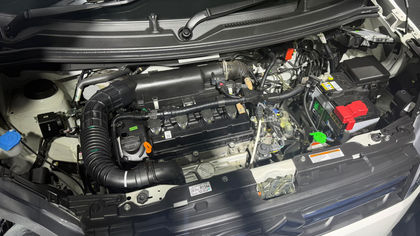
Detailed Engine and Power Specifications
| Engineering Parameter | Technical Specifications & Performance Deliverables |
| Engine Architecture | 1.2-Liter, 4-Cylinder, Naturally Aspirated DualJet K-Series Engine |
| Fuel Blend Compatibility | Multi-Flex Range: Anywhere from E20 up to E100 (Pure Ethanol) |
| Maximum Power Output | ~88.5 PS (Maintained cleanly across variable blending loops) |
| Peak Torque Output | 113 Nm @ 4,400 RPM (Linear, smooth power delivery curve) |
| Fuel Delivery System | Upgraded Multi-Point Injection with Smart Fuel Composition Sensor |
| Transmission Options | 5-Speed Slick-Shift Manual Transmission as Standard |
| Emissions Compliance | Strict BS6 Phase 2 Real Driving Emissions (RDE) Biofuel Mandates |
Pricing and Economic Variant Framework
Maruti Suzuki is introducing the alternative powertrain option across its mid-tier and high-tier configurations to make the green tech widely accessible to everyday buyers.
| Vehicle Trim Layout | Drivetrain & Fuel Configuration | Anticipated Ex-Showroom Price (INR) |
| Wagon R VXI Flex Fuel | 1.2L K-Series Flex Fuel / 5-Speed MT | Rs 6.80 Lakh |
| Wagon R ZXI Flex Fuel | 1.2L K-Series Flex Fuel / 5-Speed MT | Rs 7.25 Lakh |
The initial investment premium is kept strictly within the Rs 50,000 window. This pricing makes it significantly more affordable than a traditional factory-fitted CNG kit (which usually commands a Rs 90,000 premium) or a full battery electric vehicle transition (which can add Rs 3 lakh to Rs 4 lakh to the purchase price).
The Economics of Biofuel: Running Cost and Mileage Analysis
When considering a flex-fuel car, Indian buyers must understand the trade-offs between energy density, fuel pricing, and actual per-kilometer operating costs.
The Energy Density Deficit
It is a matter of pure chemical reality that ethanol contains roughly 33% lower calorific energy density compared to regular unblended petrol. Consequently, the engine requires a larger volume of fuel to cover the same physical distance. When running on full E85 or E100 blends, the Maruti flex fuel car mileage is expected to see a drop of about 15% to 20% compared to its petrol counterpart, stabilizing around 16 to 17 kmpl in mixed urban conditions.
The Price Parity Equation
To ensure mass adoption, the government and industry market analysts indicate that E85 fuel must be priced at least 30% lower than regular petrol. With regular petrol hovering around Rs 100 per liter across major cities, E85 fuel is projected to retail near Rs 65 to Rs 70 per liter.
Regular Petrol Run: Rs 100 / 20 kmpl = Rs 5.00 per kilometer
E85 Ethanol Run:    Rs 68 / 16 kmpl = Rs 4.25 per kilometer
Despite the slight dip in fuel economy, the substantially lower price of ethanol translates to an immediate savings of around 15% to 20% on monthly fuel bills compared to running on pure petrol. This cost advantage makes it an incredibly attractive middle ground for buyers who want low running costs without dealing with long EV charging queues or the reduced trunk space of CNG vehicles.
Infrastructure Readiness: Where Can You Fill Up?
The single biggest question surrounding the launch is the availability of high-blend ethanol at local fuel stations. To resolve this classic chicken-and-egg situation, the Ministry of Petroleum and Natural Gas is spearheading an aggressive retail expansion plan.
Major public sector oil marketing companies (including Indian Oil, BPCL, and HPCL) have begun upgrading existing high-octane fuel dispensing pumps to handle E85 fuel safely. Because dispensing ethanol requires far fewer infrastructural changes than installing bulky CNG storage cascades or setting up high-voltage electrical transformers for EVs, the national rollout is expected to move quickly. Initial deployment phases are focusing heavily on major sugar-producing states like Maharashtra, Uttar Pradesh, and Karnataka, with nationwide coverage rolling out in phases over the coming months.
Frequently Asked Questions (FAQs)
What is the launch price of the new Maruti Wagon R Flex Fuel?
The new Maruti Wagon R Flex Fuel price carries an estimated upfront introductory premium of Rs 40,000 to Rs 50,000 over the standard petrol model, setting its initial base ex-showroom price point at approximately Rs 6.80 lakh for the VXI trim level.
Can the Maruti Wagon R Flex Fuel run on regular petrol?
Yes, absolutely. The vehicle features an intelligent, automated fuel composition sensor located right in the fuel line. This system continuously reads the alcohol percentage in the tank, allowing you to fill up with regular E20 petrol, E85, or pure E100 ethanol in any combination without requiring any manual adjustments.
What mechanical changes does the Wagon R Flex Fuel have compared to the standard model?
To safely handle the chemical properties of high-blend alcohol, Maruti Suzuki has equipped the car with corrosion-resistant fuel lines, an advanced non-corrosive polymer fuel tank, a heavy-duty fuel pump, unique valve seats, and an integrated heated fuel rail system that ensures reliable starting during cold winter mornings.
What is the real-world mileage of the Wagon R when running on E85 ethanol?
Because ethanol carries a lower energy density than petrol, users can expect a fuel economy drop of roughly 15% to 20%. When running on an E85 blend, the real-world mileage will hover around 16 to 17 kmpl in typical urban traffic conditions, compared to the standard version’s 20 kmpl run.
How much cheaper will ethanol fuel be compared to normal petrol in India?
To make alternative fuels commercially viable for everyday commuters, the government plans to price E85 fuel at least 30% below regular petrol. This places the targeted retail price of ethanol fuel between Rs 65 and Rs 70 per liter in major metropolitan hubs.
When will E85 and E100 fuel pumps open across India?
Oil marketing companies have already started deploying dedicated biofuel dispensing stations across major sugar-producing regions, including Maharashtra, Karnataka, and Uttar Pradesh. The urban network expansion is scheduled to scale up rapidly over the next few months to support new vehicle manufacturing streams.
Key Takeaways
- Accessible Green Transition: Launches with a highly accessible pricing strategy that requires a modest premium of less than Rs 50,000 over regular petrol variants.
- Smart Fuel Adaptation: The onboard ECU continuously optimizes spark advance maps to safely handle any blend from E20 up to E100.
- Preserved Practicality: Unlike CNG retrofits that take up valuable luggage space, the flex-fuel setup leaves the Wagon R’s practical cabin and boot space completely unchanged.
- Protected Mechanical Integrity: Upgraded with high-grade, corrosion-resistant polymers and stainless steel components to ensure long-term reliability.
- Insulated from Oil Shocks: Shifting to locally produced agricultural biofuels helps insulate vehicle operating costs from volatile global crude oil price hikes.
Final Verdict
The launch of the Maruti Wagon R Flex Fuel marks an incredibly significant milestone for mass mobility in India. By successfully engineering an affordable, ethanol-compatible vehicle, Maruti Suzuki has delivered a highly practical alternative for middle-class buyers who find full electric vehicles too expensive and find CNG tanks too restrictive. The slight dip in fuel economy is easily offset by the lower price point of E85 fuel, making it a highly compelling financial proposition for high-mileage urban commuters. If you are looking for an affordable, time-tested family car that offers excellent structural utility, lower emissions, and immediate protection from rising petrol prices, the new Wagon R Flex Fuel stands out as a pioneering, highly forward-thinking choice for your garage.
Read this also:
Maruti Suzuki Swift Gets Cheaper: 2025 में ₹1 लाख तक की छूट – जानें पूरी डीटेल